Now Available
Your machines remember everything
Every vibration, every repair, every dollar spent. Captured as permanent evidence, and sharpened each time an operator confirms, corrects, or explains what actually happened. Free monitoring. Intelligence when you need it.
Grounded in measured evidence
Every assessment is based on real sensor readings from your machine.
When data quality drops, MIS says so instead of guessing.
Outside interference like impacts or environmental noise gets flagged so it does not affect your results.
You always have the final say.
How it works
Install
Attach the MIS sensor to any machine in under 5 minutes. No wiring, no downtime.
Monitor
Continuous vibration and acoustic data flows automatically. 24/7 evidence accumulation.
Verify
See behavior changes, verify repairs, and build proof over time. Evidence you can trust.
What MIS does not do yet
Tap a stage to learn more
Each stage only activates when the previous stage is working well.
MIS does not guess. It reports what the measured evidence supports.
Get started
We handle everything.
Installation, monitoring, and support are all included. Sensor hardware included in every plan. No upfront equipment cost.
A QR page for every machine
Scan the code on any machine to see its current status, operating history, and any changes detected.
Repair verification built in
Log what you fixed. MIS measures whether the machine actually improved after. Close the loop on every repair.
Always on
No schedules, no manual checks. It runs continuously.
Your data, your machines
Every reading is timestamped and stored permanently. Export anytime.
You stay in control
MIS gives you evidence. You make the call.
In the field
This is what it looks like on a working machine
Not renderings. These are the sensors, the machines they are bolted to, and the sheet an operator scans to talk to one, photographed on production lines that run every day.
01 / 07
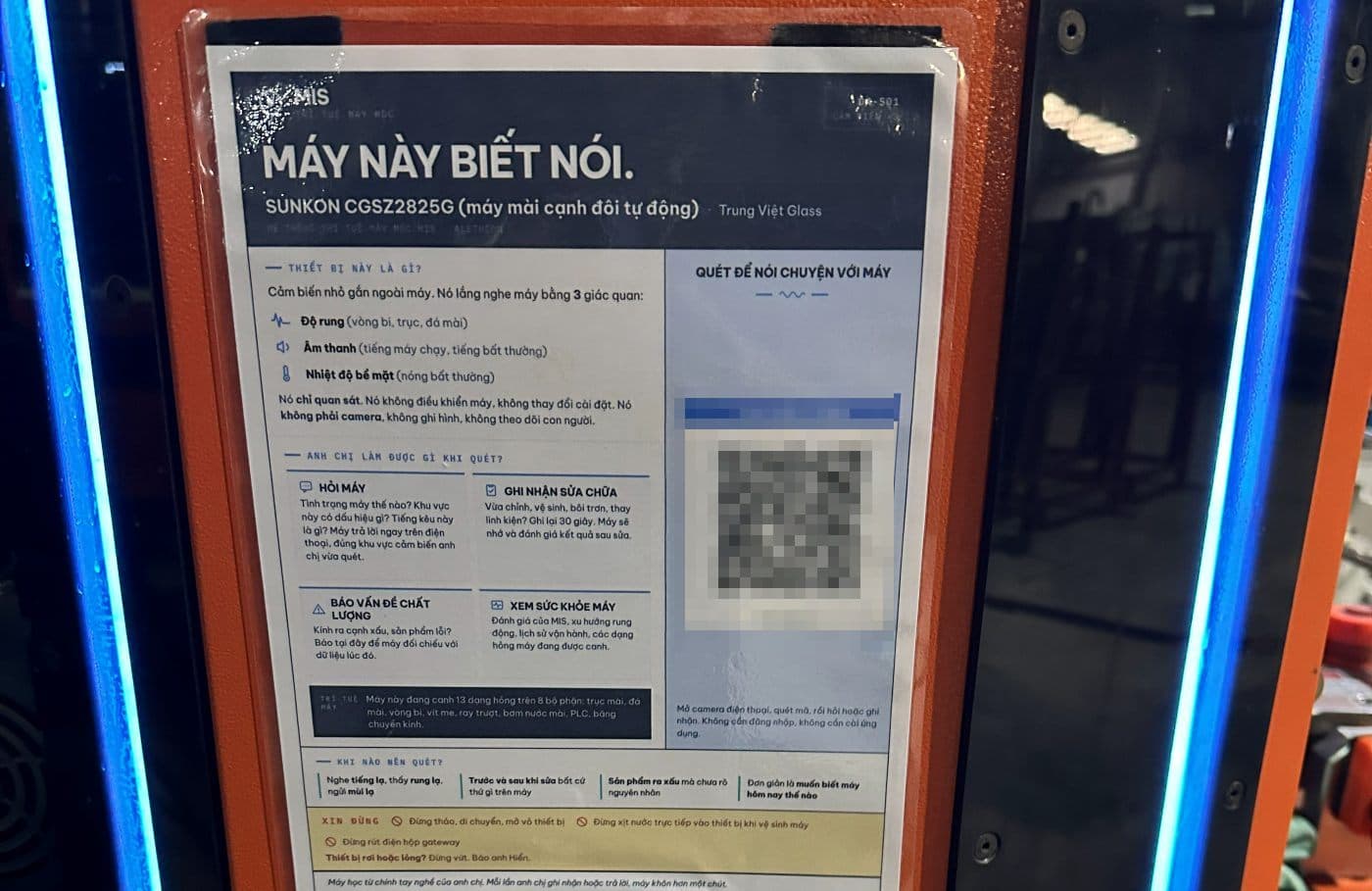
The operator scans a sheet, and the machine answers
What the operator sees. A sheet on the machine, in their language, with the code that opens a conversation with it. No account, no app, no training.
A laminated sheet mounted on an orange machine panel. The heading reads MAY NAY BIET NOI, meaning this machine can talk. Below it are the machine model, an explanation of the three things the sensor senses, and a large QR code labelled as the main sensor.
02 / 07
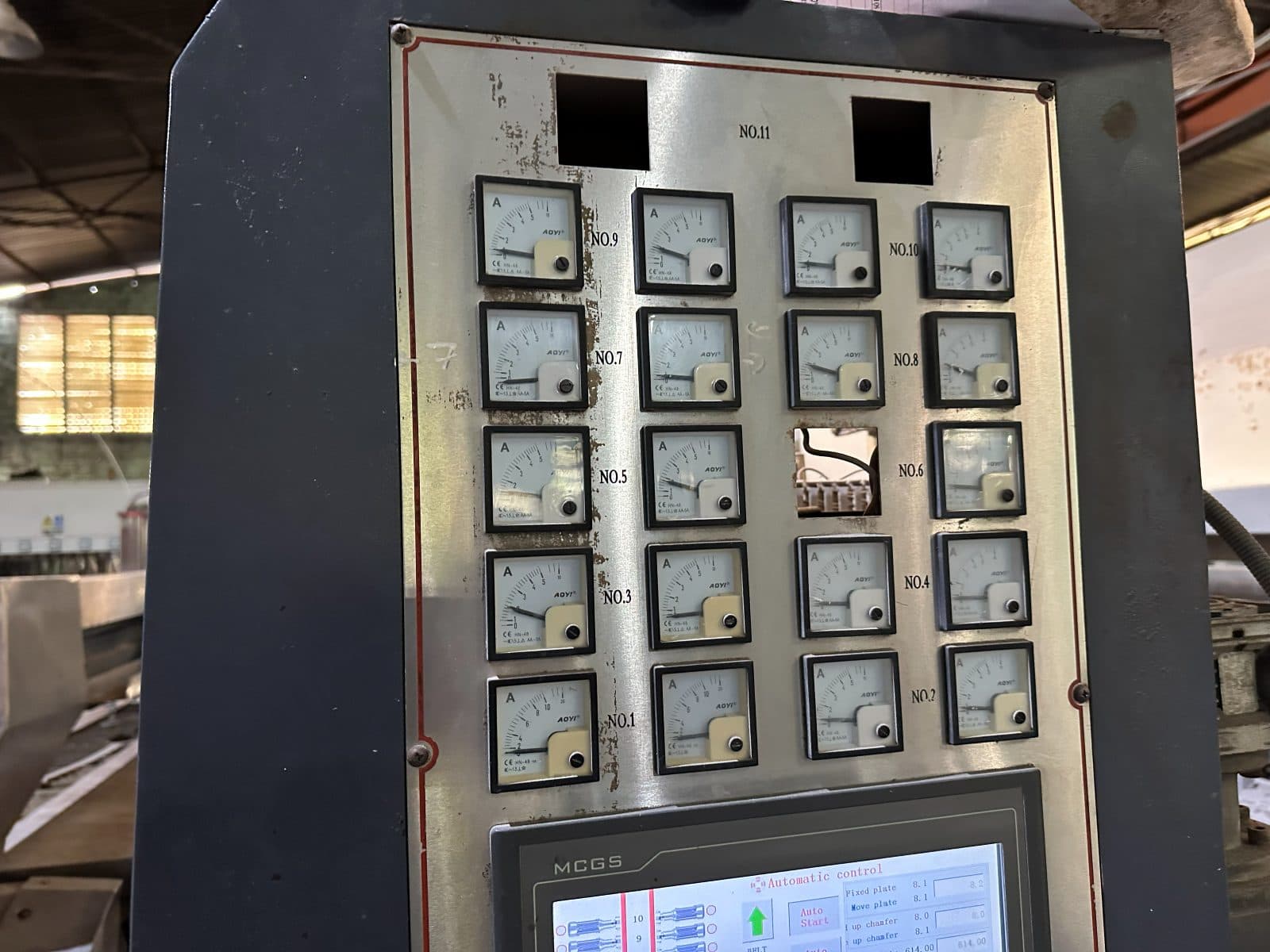
What a factory has without a memory
Twenty dials and a screen. Every reading is live and none of it is kept, so a change that happened three weeks ago left no trace anyone can go back to.
A machine control panel with twenty analogue ammeters labelled NO.1 to NO.11 above a small touchscreen showing an automatic control page. One meter is missing, leaving an open hole with wiring visible.
03 / 07
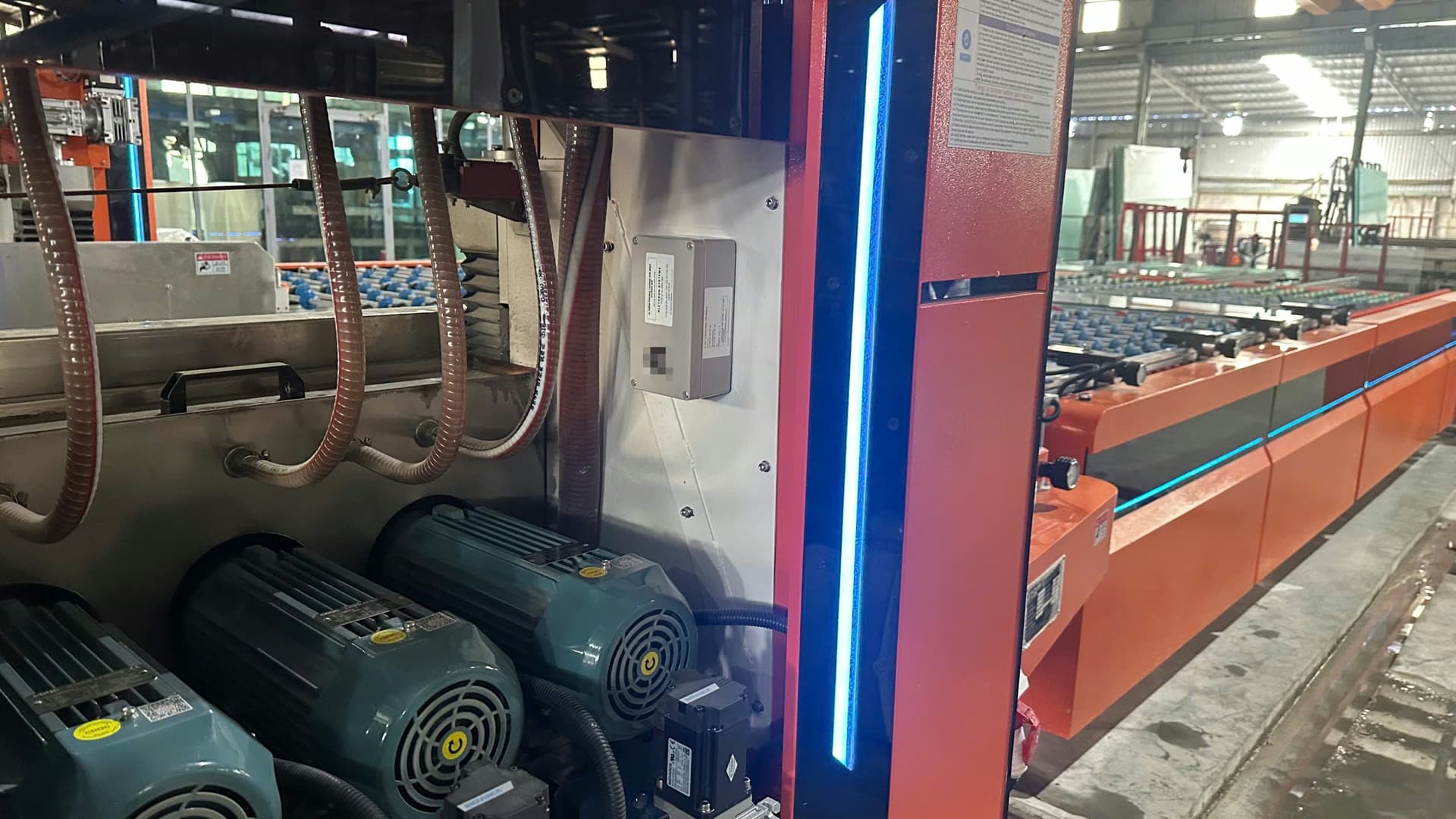
The sensor on the newest automatic line
The MIS sensor in place on a newer automatic edging line. It records the section it is bolted to while the line runs its normal production, and keeps every reading as one continuous history rather than a number that vanishes when the shift ends.
A pale grey MIS sensor box mounted on the stainless steel panel of an orange automatic glass edging machine, above a row of dark green spindle motors, with the production line running into the factory behind.
04 / 07
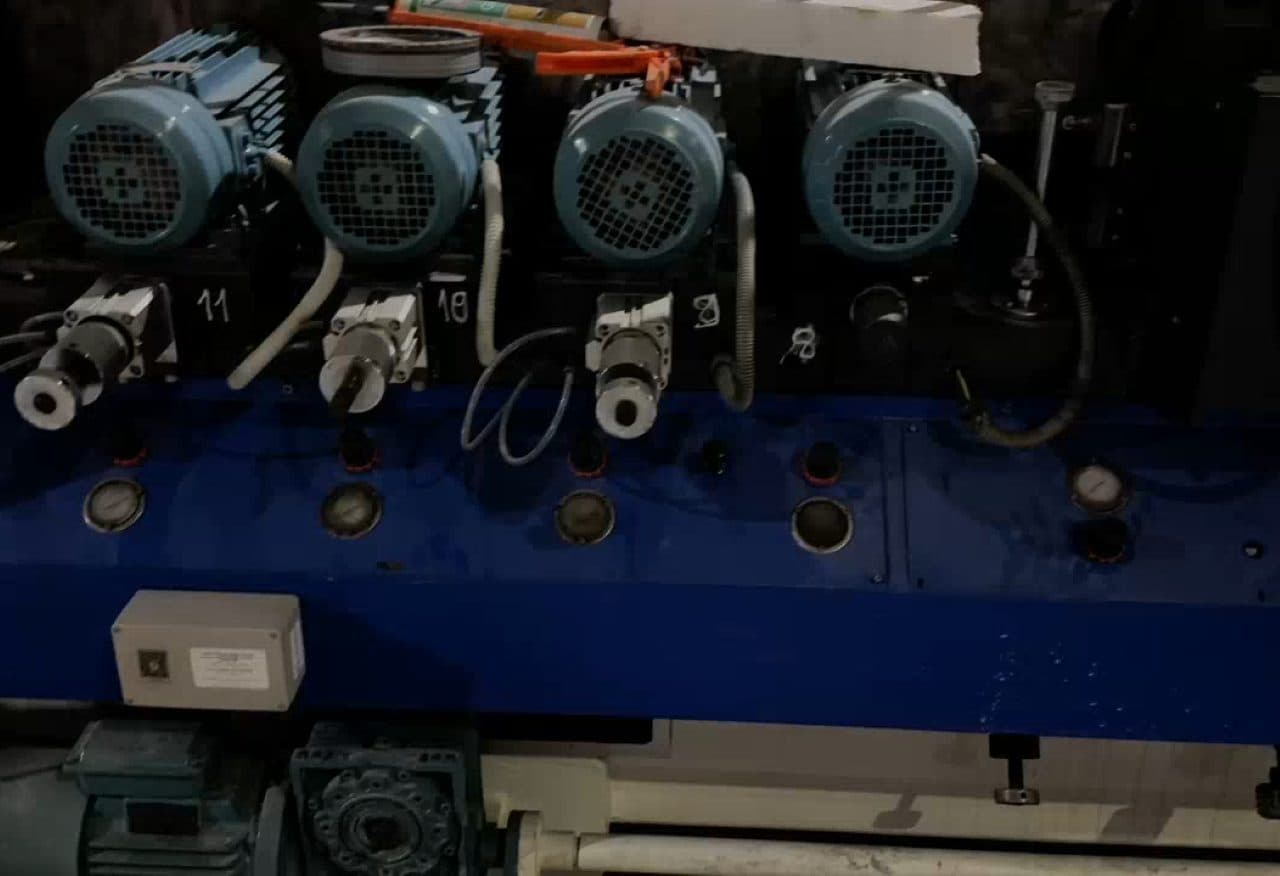
Bolted to the spindle bank it reports on
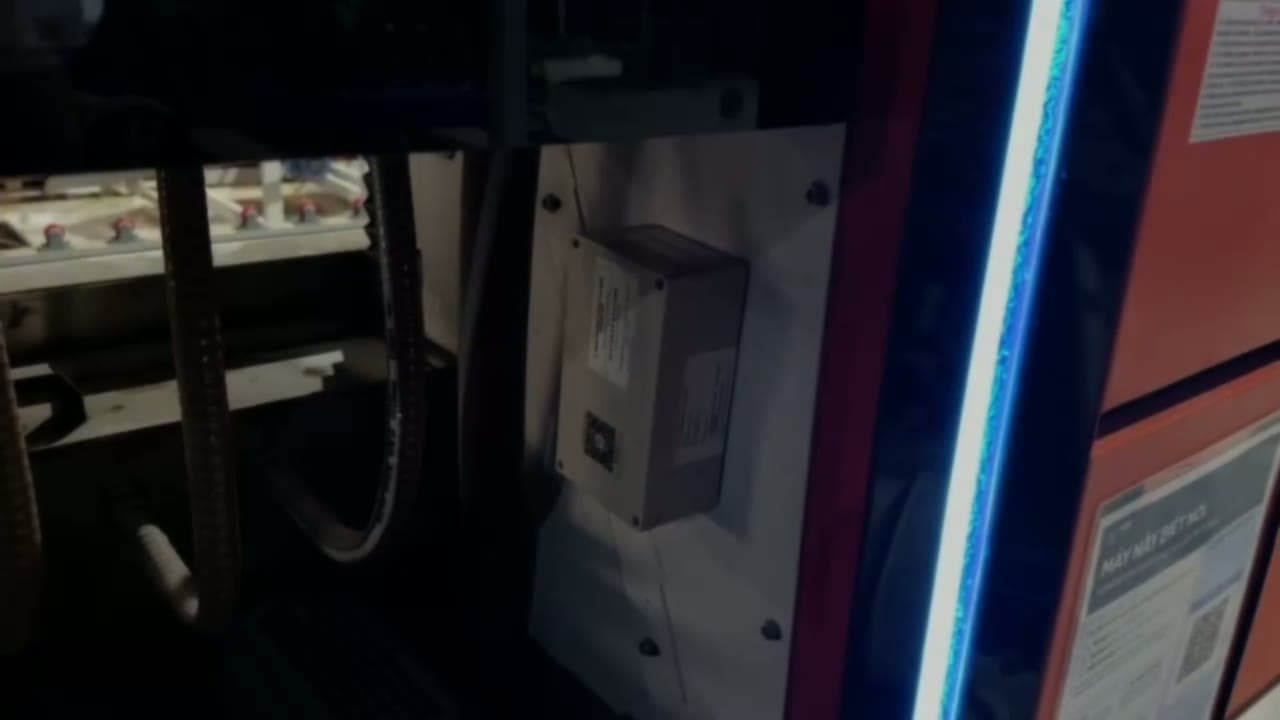
The sensor in place. The pale box on the blue frame records the spindle bank it is bolted to, beside the chalk station numbers the operators themselves use.
Short looping clip panning across four spindle motors on a blue machine frame, with chalk station numbers beside them and a small pale sensor box mounted below.
05 / 07
Two sensors, two zones, one machine
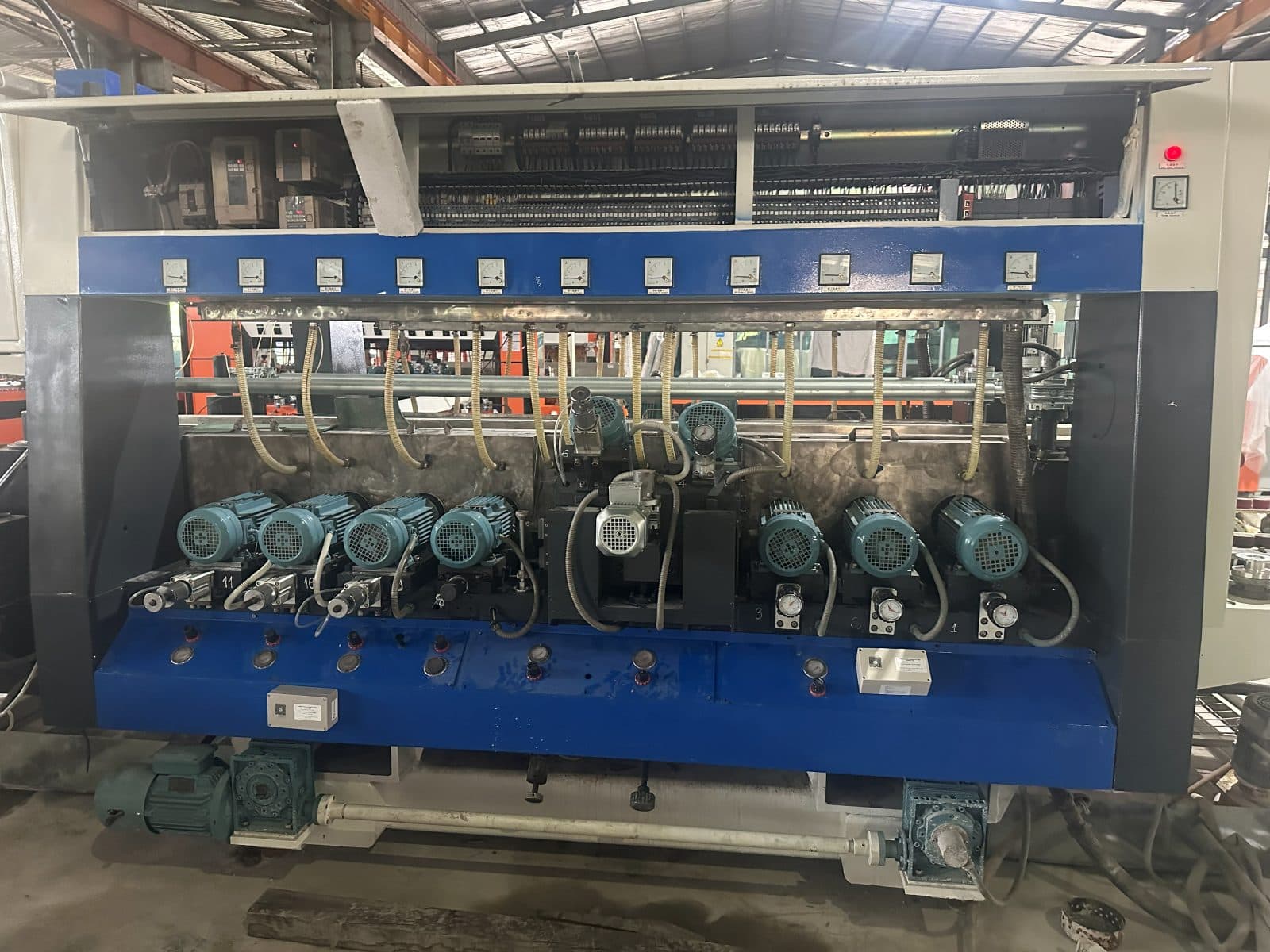
A full edging line under observation. Two sensors sit on this machine, each reporting its own zone rather than blending into a single number.
A wide view of a blue glass edging machine with eleven analogue meters above a row of spindle motors. Two small pale sensor boxes are mounted along the lower frame.
06 / 07
A newer automatic line, instrumented the same way
A newer automatic line, instrumented the same way. Per station current on the machine's own displays, vibration and sound and surface temperature on ours.
Short looping clip across an orange and white automatic edging machine showing a row of red digital current displays above the spindle bank.
07 / 07
Retrofit onto machines already in service
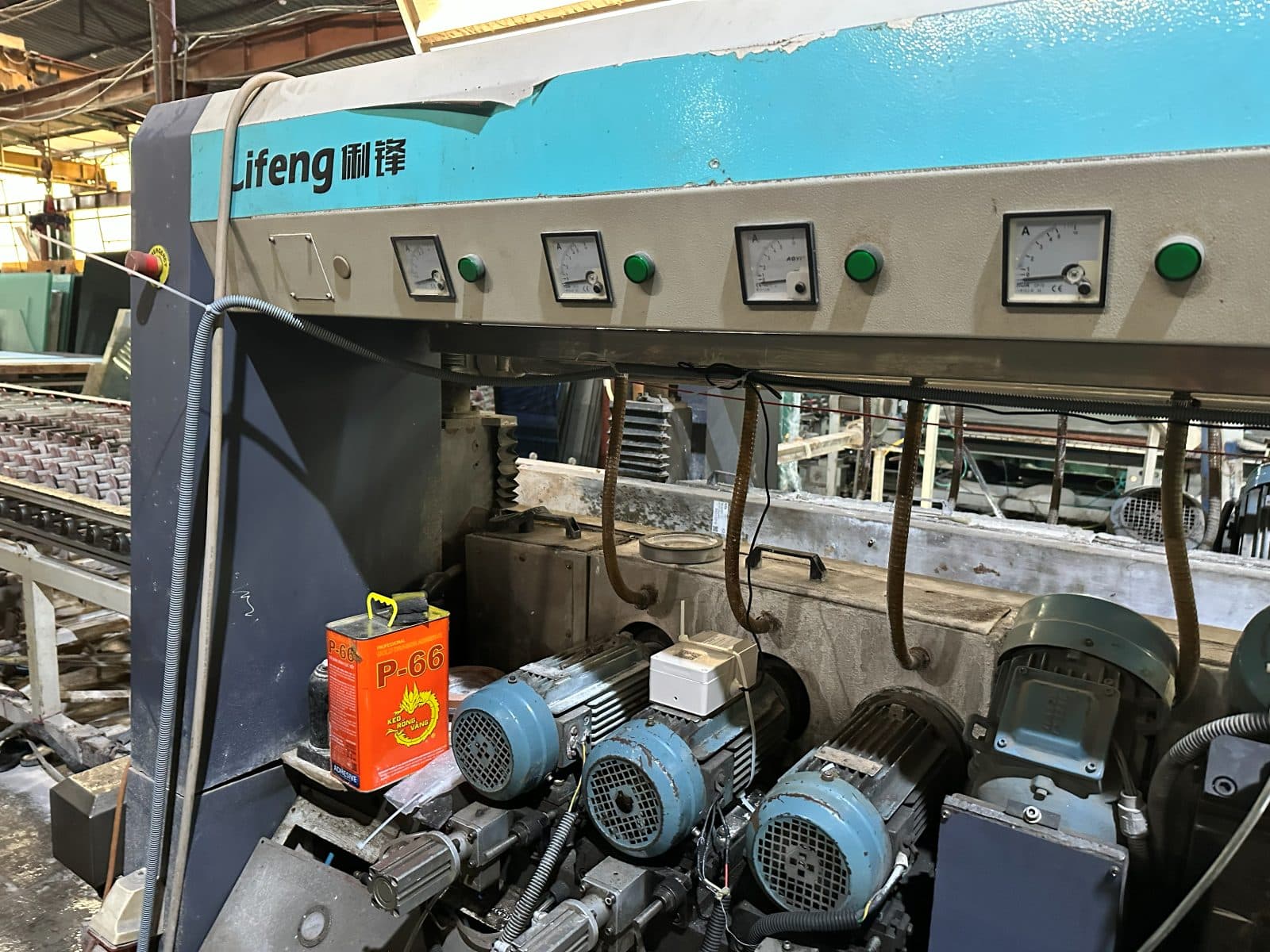
Retrofit, not replacement. The sensor mounts on machines already in service, without changing how the machine is wired or operated.
A glass edging machine with a row of blue spindle motors under analogue meters. A small white sensor box with a short antenna is mounted among the motors.
Platform Evolution
Built to grow with your business
Every generation widens what a machine can notice about itself. Here is what ships today, what is next, and what is planned.
$69 per device
Runs from a wall outlet, so it never has to ration what it senses
Tracks vibration and sound patterns across weeks and months
Knows when the machine is running and for how long, without being told
Senses when people are working around the machine, and when the area is empty. No camera, no recording, no watching anyone
Understands the machine type, its parts, and how they work together. Useful context from day one, before its own history exists
Speaks up when something changes, and stays quiet when nothing has
Every statement tied to real sensor readings, never guesswork
Keeps recording through network outages and uploads when the link returns
Your MIS gets smarter every day it runs, regardless of generation.
A Gen 1 device running for six months knows your machine better than a brand-new Gen 3. Every session, every vibration pattern, every operating cycle builds permanent intelligence about your specific machine. Generations expand what MIS can observe. Time deepens what MIS understands. The earlier you deploy, the smarter your system becomes.
Every machine deserves a memory.
MIS builds permanent intelligence from measured evidence. The earlier you start, the deeper it understands.